
Set Extension Presence Status
Use the Set Extension Presence Status component to change an extension’s current presence from inside a call flow. This page explains what the component does, how to configure it, and which components it can feed into.
What it does
Section titled “What it does”This component sets the presence status of an extension while a call flow is running. You can point it at a fixed extension, or use an expression to resolve the target extension at run time, and then choose the presence value to apply.
Presence status is the label that says whether a user is reachable (for example Available, Away, Do Not Disturb, Lunch Break, or Business Trip). Because each extension can route or block its own calls based on that label, changing presence from a call flow lets you automate it. For example, you can flip a receptionist’s extension to Away when a menu option is chosen, or set a user to Do Not Disturb after hours.
Configure the component
Section titled “Configure the component”Set Extension Presence Status is one of the operations provided by the Internal Data Ops component. “Internal Data Ops” is the component that reads from and writes to your phone system’s own database.
-
Add an Internal Data Ops component to your call flow, then click it to open its settings.
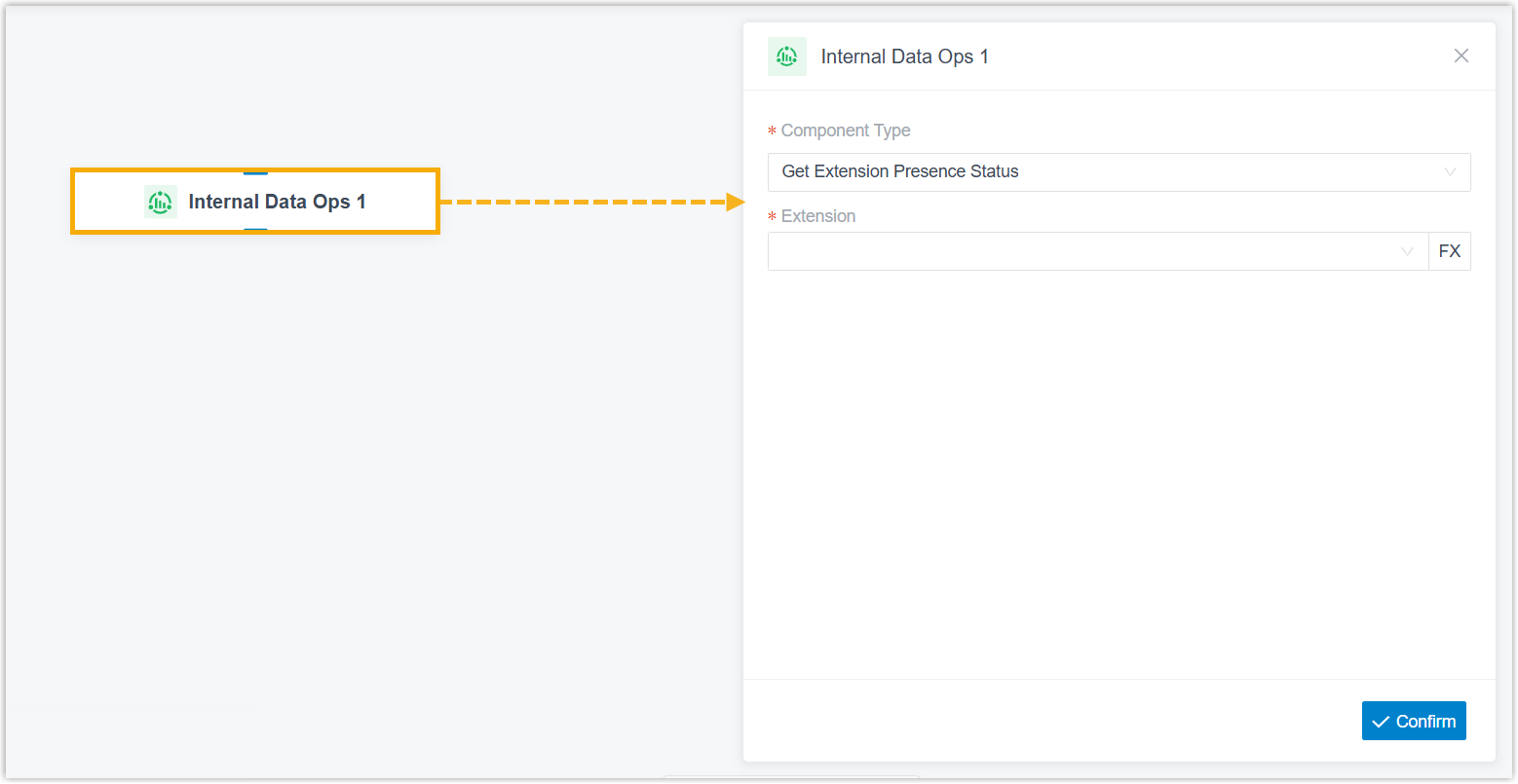
-
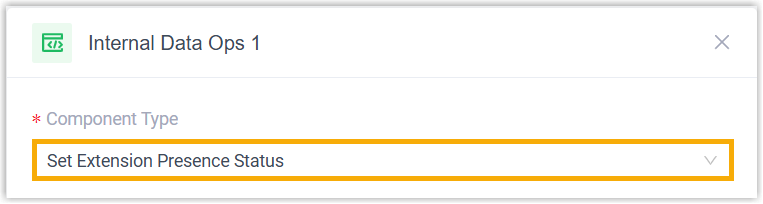
Open the Component Type drop-down list and choose Set Extension Presence Status.
-
Choose how to identify the extension whose presence you want to change:

-
Extension: Pick a specific extension from the drop-down list.
-
Expression: Click the
 icon to build an expression that resolves the extension dynamically.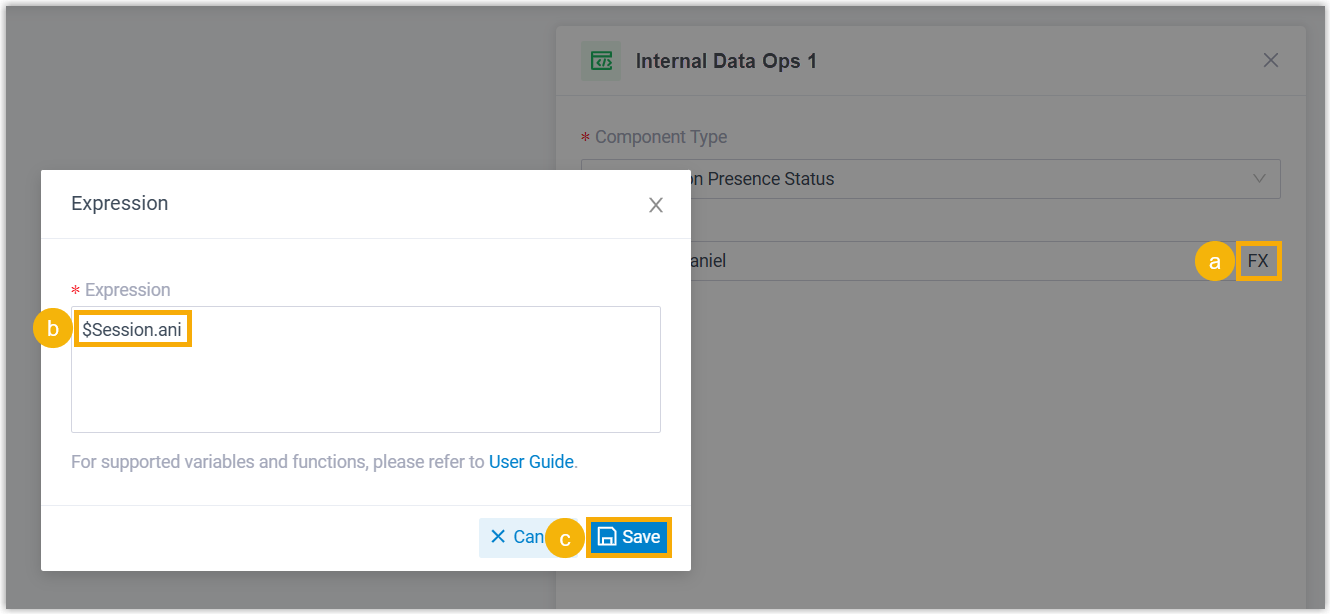
For instance, entering
$Session.anitargets whichever extension matches the caller’s number. ANI (Automatic Number Identification) is the caller’s own number, also shown as Caller ID.
-
-
In the Presence drop-down list, select the status to apply.

-
Click Confirm in the bottom-right corner.
Supported connections
Section titled “Supported connections”Set Extension Presence Status can pass the call to one downstream component. Any of the following are valid targets.
| Component | Description |
|---|---|
| Prompt | Plays an audio prompt or a text-to-speech message to the caller. |
| Business Hours | Routes calls to different destinations depending on the time of day. |
| Menu | Offers callers a set of options and routes the call based on the DTMF (Dual-Tone Multi-Frequency, the tone a phone keypad sends) digit pressed. |
| User Input | Collects DTMF digits from the caller, typically paired with a Condition component to evaluate the input and route accordingly. |
| Language | Switches the system prompt language for the components that follow in the flow. |
| Record | Starts recording once the caller connects to another party, with optional prompts announcing the recording. It can also disable recording for calls that would otherwise be recorded. |
| Dial by Number | Lets callers dial a number directly to reach their destination. |
| Dial by Name | An end component that lets callers reach a user by entering the first three letters of that user’s name. |
| Transfer | An end component that sends the caller to a chosen destination, with optional prompts announcing the transfer. |
| Hang Up Call | An end component that disconnects the call. |
| Condition | Routes the call based on logical expressions. |
| Loop | Repeats a group of components a set number of times or until a condition is satisfied. |
| Internal Data Ops | Queries and updates data held in the PBX-native (Private Branch Exchange, your phone system) database. See the related operations: Get Extension Presence Status, Set Extension Presence Status, Get Queue Agent, Get Queue Info, Get Agent Status, Set Agent Status, Get System Info, Get System Capacity, Get Extension Info, and Get Company Contact Info. |
| Email Sender | Sends email for real-time notifications, alerts, or delivery of user-specific information. |
| Database Access | Runs SQL (Structured Query Language) operations against a database to read or update data during the call flow. |
| HTTP Request | Sends HTTP (HyperText Transfer Protocol) requests to external web servers to exchange data with third-party services. |
Question about this page?
Ask the AI assistant. It starts from this page, then searches the rest of the docs.
Ask Cloud Voice AI
Answers are AI-generated from the docs and may contain mistakes. Verify with the linked pages.