
Cloud Voice Security Guide
Your phone system is a target. Threats reach it from two directions: across the public Internet and over your telephone lines. Attackers spend their time hunting for a way in, and if they succeed they place fraudulent calls at your expense, pocket the revenue those calls generate, and leave you holding an unexpectedly large bill. This guide explains where those threats come from and how to harden your Cloud Voice system against them so you can keep toll fraud to a minimum.
How attackers break into a phone system
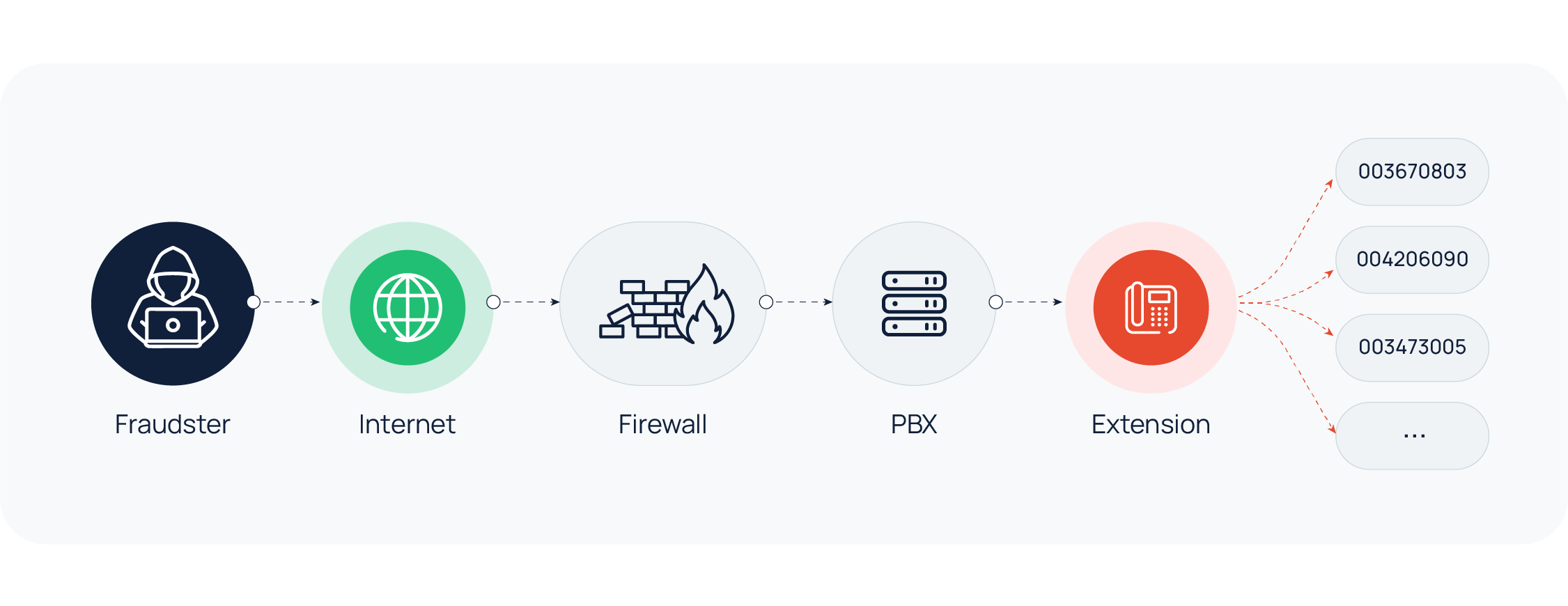
Section titled “How attackers break into a phone system”Most intrusions begin with automated reconnaissance. Attackers run scanning tools that sweep the Internet looking for weak points in an organization’s network defenses, with open ports being a common giveaway. When a scan turns up an exposed port, the attacker probes it, sending crafted requests to coax out details about how the system is configured and where it might be vulnerable.
Piece by piece, that information adds up. Armed with enough of it, an attacker can mount a brute-force attempt against your firewall (rapidly trying many passwords or requests until one gets through) and eventually force their way past it. Once inside, they reach the PBX itself, plant a hidden back door so they can return whenever they like, and begin pushing call traffic through your system. Left unchecked, this is exactly how toll fraud runs up a costly bill.
How to defend against breaches and toll fraud
Section titled “How to defend against breaches and toll fraud”There is no way to make a phone system perfectly secure. Your communication needs keep changing, and the techniques attackers use keep evolving right alongside them, so new weaknesses will always appear. What you can do is shrink your exposure through steady, deliberate effort: stay aware of the risks, take preventive action before problems occur, and audit your configuration on a regular basis.
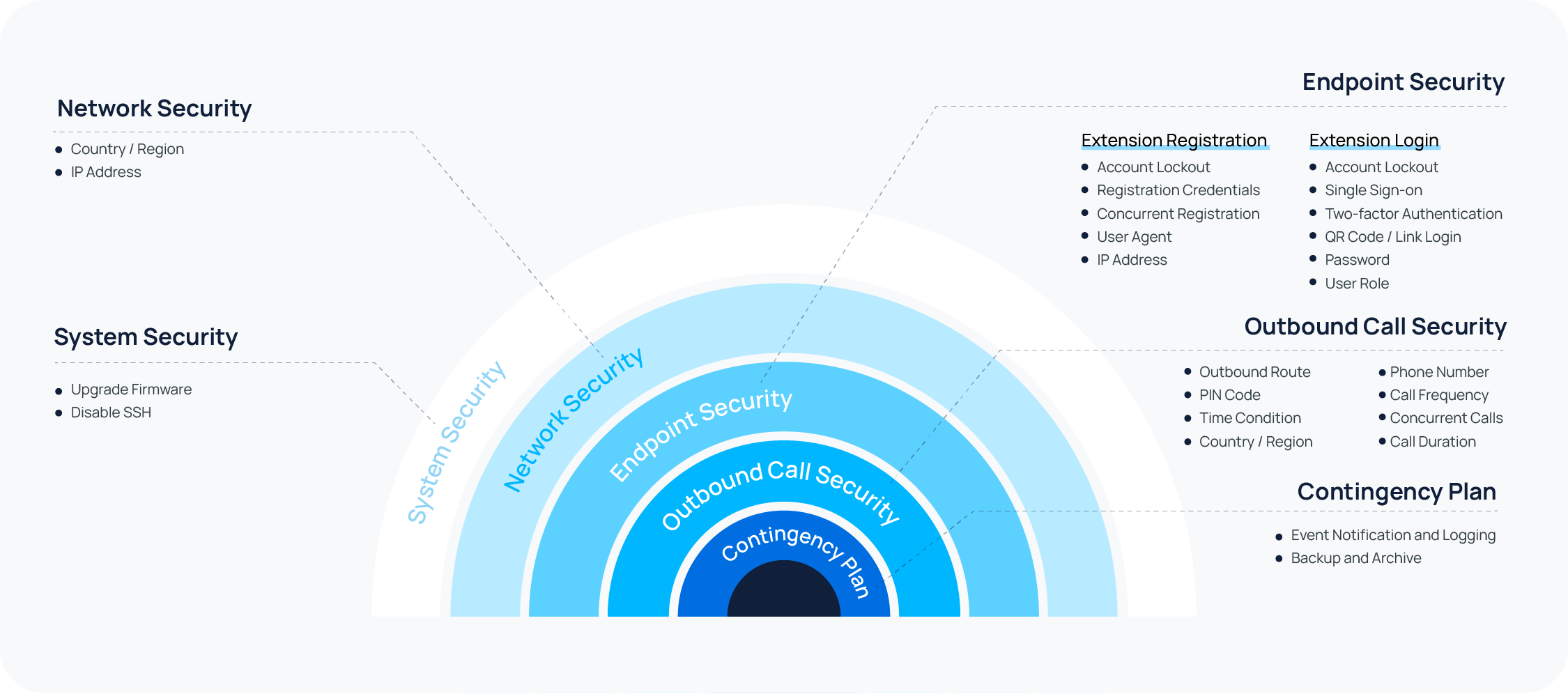
The most effective way to stay protected is to build your defenses in layers. Rather than relying on a single safeguard, you combine several independent protections so that they reinforce one another. The advantage of this approach is resilience: if an attacker manages to defeat one layer, the layers behind it are still standing and continue to guard the system.
Question about this page?
Ask the AI assistant. It starts from this page, then searches the rest of the docs.
Ask Cloud Voice AI
Answers are AI-generated from the docs and may contain mistakes. Verify with the linked pages.